RSV Vaccine Now Available in India: What Parents Need to Know About Nirsevimab
RSV (Respiratory Syncytial Virus) is the leading cause of hospitalisations in babies under 1 year in India — causing an estimated over 1 lakh pediatric hospitalisations annually. Until recently, there was no way to protect infants from this common and potentially serious respiratory infection.
That changed in August 2024 when India's drug regulator (CDSCO) approved nirsevimab, marketed as Beyfortus — the country's first approved protection against RSV for infants.
"RSV is something every parent of a young baby should know about. Nirsevimab gives us a safe, effective tool to protect infants during their most vulnerable months." – Dr. Garima Mengi, KinderCure Clinic
What is RSV and Why Should Indian Parents Care?
RSV is a highly contagious virus that causes respiratory infections. In older children and adults, it looks like a common cold. But in infants — especially those under 6 months — RSV can rapidly progress to:
- Bronchiolitis — inflammation of the small airways in the lungs
- Pneumonia — lung infection requiring hospitalisation
- Breathing difficulties requiring oxygen support or ICU care
RSV in India: The Numbers
- RSV causes approximately 33 million lower respiratory infections globally each year
- In India, RSV is responsible for an estimated over 1 lakh pediatric hospitalisations annually
- Studies suggest babies are hospitalised from RSV 16 times more than from influenza
- RSV season in India runs from August to January, peaking September–December
Nirsevimab (Beyfortus): India's First RSV Protection
Nirsevimab is not a traditional vaccine. It is a monoclonal antibody — meaning it gives your baby ready-made protection immediately, rather than requiring the immune system to build its own response over time.
Key Facts About Nirsevimab
- Single dose — one injection provides approximately 5 months of protection
- Immediate protection — antibodies start working right away
- CDSCO approved — approved in India in August 2024
- Recommended by IAP, CDC, and AAP for all infants entering their first RSV season
- Safe — clinical trials showed safety similar to placebo, with mild side effects (injection site redness, mild rash)
How Nirsevimab Differs from Vaccines
Unlike vaccines that teach the body to produce its own antibodies (which takes time), nirsevimab provides pre-formed antibodies directly. This is why it works immediately and is safe even for very young infants whose immune systems are still developing.
Who Should Get Nirsevimab?
The Indian Academy of Pediatrics (IAP) recommends nirsevimab for:
All Infants Under 1 Year
Every baby under 12 months of age entering their first RSV season should receive nirsevimab. The ideal timing is just before the start of RSV season (July–August in India).
High-Risk Infants Up to 24 Months
Babies at higher risk of severe RSV illness may benefit from protection during their second RSV season as well. This includes:
- Premature babies (born before 37 weeks) — their lungs are not fully developed, making them especially vulnerable
- Babies with chronic lung disease (bronchopulmonary dysplasia)
- Babies with congenital heart disease
- Babies with weakened immune systems
If your baby spent time in the NICU, discuss RSV protection timing with your pediatrician.
When to Get RSV Immunization
RSV season in India typically runs from August to January, with peak activity between September and December.
Ideal Timing
- Before monsoon season (July–August) for babies born before the RSV season
- At birth or shortly after for babies born during RSV season
- Anytime during RSV season if your baby hasn't yet received protection
The current RSV season ended in January 2026. The next RSV season starts August 2026 — this gives parents a window to plan ahead and consult their pediatrician.
What About the Maternal RSV Vaccine?
You may have heard about Abrysvo — a maternal RSV vaccine given to pregnant women during the third trimester to pass protective antibodies to the baby before birth.
Important: The maternal RSV vaccine (Abrysvo) is not yet available in India. Nirsevimab, given directly to infants after birth, is currently the only approved option for RSV protection in India.
Both approaches should not be used together for the same infant. If the maternal vaccine becomes available in India in the future, your pediatrician will guide you on the best approach.
Is Nirsevimab the Same as RSV Vaccine?
This is a common question. Technically, nirsevimab is not a vaccine — it is a monoclonal antibody. However, it is widely referred to as "RSV vaccine" because it serves the same purpose: protecting your baby from RSV infection.
The key difference:
- Vaccines teach the body to make its own antibodies (active immunity)
- Nirsevimab provides ready-made antibodies directly (passive immunity)
Both provide protection. Nirsevimab has the advantage of immediate effect from a single dose, making it ideal for young infants.
Can Nirsevimab Be Given with Other Vaccines?
Yes. Nirsevimab can be safely administered alongside routine childhood vaccines (DTaP, Hepatitis B, IPV, and others) without affecting the safety or efficacy of either. This means your baby can receive RSV protection during a regular vaccination visit — no additional trip needed.
Where to Get RSV Immunization in Delhi NCR
Nirsevimab (Beyfortus) is available at KinderCure Clinic in Gurgaon. We maintain stock for immediate administration and offer same-day appointments Monday to Saturday.
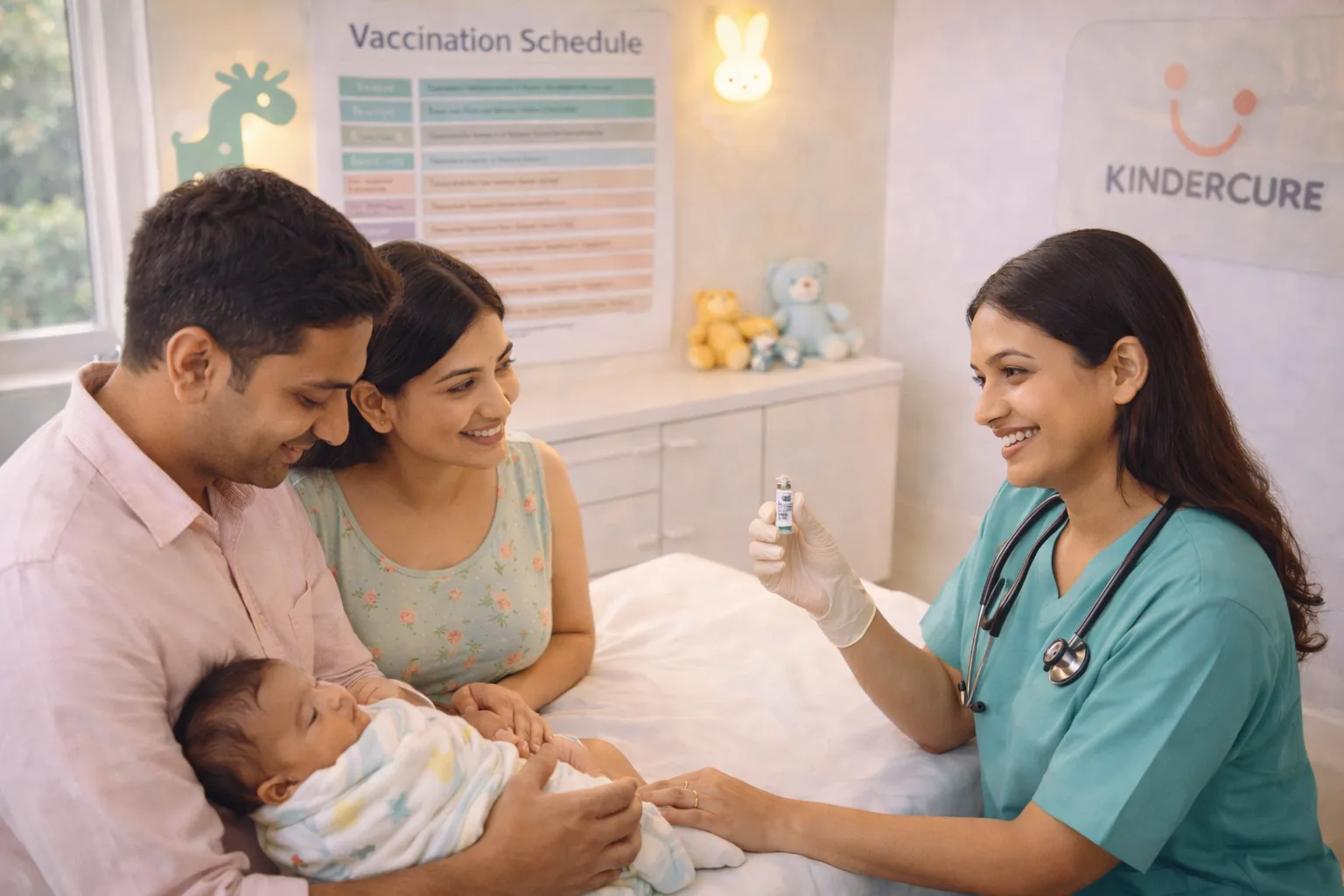
What to Expect at Your Visit
- Brief consultation — Dr. Garima Mengi assesses your baby's health and eligibility
- Single injection — administered in the thigh, takes just seconds
- Short observation — we monitor your baby for a brief period after the injection
- You're done — one dose provides 5 months of protection
Prior appointment is recommended so we can ensure stock availability and preparation for your baby's visit.
Frequently Asked Questions
How much does nirsevimab cost?
Contact KinderCure for current pricing. The cost includes consultation and post-immunization monitoring.
Are there side effects?
Clinical studies showed nirsevimab had a safety profile similar to placebo. Common side effects are mild: slight redness at the injection site, mild rash, or temporary fussiness. Serious reactions are extremely rare.
Can premature babies get nirsevimab?
Yes — premature babies are actually among the highest priority candidates because their underdeveloped lungs make them more vulnerable to severe RSV illness.
My baby is 8 months old and hasn't had nirsevimab. Is it too late?
If your baby is still under 12 months and RSV season is ongoing, they can still receive nirsevimab. Contact us to discuss the best approach.
Protect Your Baby Before the Next RSV Season
The next RSV season begins in August 2026. Now is the perfect time to:
- Learn about RSV and how nirsevimab works
- Consult with a pediatrician about your baby's eligibility
- Plan the timing of immunization before monsoon season
Book your baby's RSV immunization consultation at KinderCure Gurgaon — or call/WhatsApp us at +91-7678252448.